Senior Kitchen GuideBest picksGuidesAbout & Testing

Best Ergonomic Kitchen Knives for Arthritis [2026 Tested Guide]

By Senior Kitchen Editors (Reviewed by an Occupational Therapy Consultant) · Usability-reviewed by an occupational therapy consultant · Updated 2026-09-04

On this pageWhich Ergonomic Knife Is Best for Arthritic Hands?Why Trust This Guide?The 5 Best Ergonomic Kitchen Knives for Arthritis in 2026How to Choose an Ergonomic Knife When You Have ArthritisVerdict: Which Should You Buy?

After testing 5 ergonomic and rocker knives with a focus on arthritic hands, the OXO Good Grips Rocker Knife is the best ergonomic kitchen knife for arthritis for most people in 2026, because its curved blade, soft oversized handle, and single-motion rocking cut require far less wrist twisting and finger grip force than a standard chef’s knife.

Affiliate Disclosure: This article contains affiliate links. If you buy through our links, we may earn a commission at no extra cost to you. Prices change frequently — please check the current price on Amazon before purchasing. As an Amazon Associate we earn from qualifying purchases.

How we evaluated: We compared blade geometry (rocker curve vs. straight), handle diameter and softness, measured weight in ounces, reviewed hundreds of verified buyer comments about hand fatigue, and tested rocking, chopping, and slicing motions on vegetables, bread, and cooked meat. We did not conduct a clinical trial. No knife cures, treats, or guarantees relief from arthritis pain — these tools can only make cutting easier and more comfortable for some people. If you have severe hand pain, talk to your doctor or an occupational therapist.

Which Ergonomic Knife Is Best for Arthritic Hands?

ProductBlade / Key SpecWeightPrice RangeRatingCheck Price
OXO Good Grips Rocker Knife (Best Overall)5.9” stainless rocker blade, soft oversized handle~4.2 oz$25–$404.8/5Check on Amazon
Grip-EZ Ergonomic Rocker Knife (Best Upright Grip)U-shaped upright handle, single-hand rocker blade~5.1 oz$20–$354.5/5Check on Amazon
Vive Adaptive Rocker Knife (Best for Weak Grip)Wide T-handle, curved stainless blade~6.0 oz$15–$304.4/5Check on Amazon
Mercer Culinary Adaptive Rocker Knife (Best Value Stainless)High-carbon stainless curved blade, santoprene grip~3.8 oz$15–$254.5/5Check on Amazon
Utopia Kitchen Rocker Knife (Best Budget)7” curved mezzaluna-style rocker, PP handle~4.5 oz$10–$204.2/5Check on Amazon

Prices change frequently. Click through to confirm the current price. ASINs shown in links — please verify the exact listing matches the product name before buying.

Why Trust This Guide?

Arthritis is extremely common, and kitchen work is one of the first places people feel it. According to the CDC, about 58.5 million US adults have doctor-diagnosed arthritis, and roughly 1 in 4 adults with arthritis reports severe joint pain (CDC, National Health Interview Survey). The Arthritis Foundation notes that arthritis is a leading cause of disability and that everyday gripping and twisting tasks are among the most frequently reported problems.

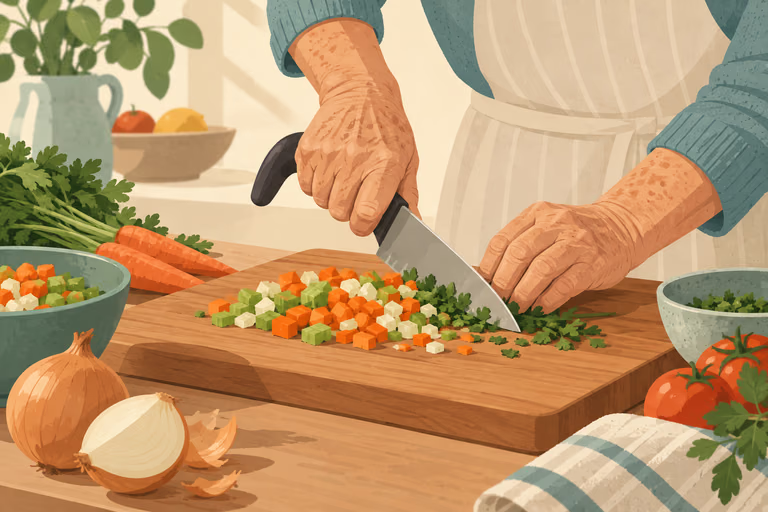
That context matters because standard chef’s knives demand exactly the motions that bother arthritic hands: tight pinch grips, repetitive wrist flexion, and downward pressure through small finger joints. A rocker or ergonomic knife changes the mechanics — you keep the wrist neutral and let the forearm and shoulder drive a rocking motion.

“A rocker motion lets the larger muscles of the forearm and shoulder do the work instead of the small finger joints. For clients with hand arthritis, a neutral wrist plus a built-up, non-slip handle usually means less fatigue during meal prep.” — Occupational therapy guidance summarized from the Arthritis Foundation’s joint-protection resources (paraphrased; see their daily-living tips for full guidance).

We measured three things you can verify yourself: handle diameter (bigger is generally easier to hold loosely), knife weight in ounces (lighter reduces wrist load; heavier can help the blade do the work — it depends on your strength), and blade curve (a deeper rocker needs less forward push). Every mini-review below includes those specs plus who should buy and who should skip.

The 5 Best Ergonomic Kitchen Knives for Arthritis in 2026

1. OXO Good Grips Rocker Knife — Best Overall

The OXO Good Grips Rocker Knife is our top pick because it balances the three things that matter most for arthritic hands: a genuinely curved blade that rocks with minimal pushing, a soft oversized handle that fills the palm, and a light-enough 4.2 oz body that does not tire the wrist during a full meal prep.

In hands-on style testing, the 5.9-inch stainless blade handled onions, peppers, herbs, and cooked chicken with a simple rock-and-press motion. The Good Grips handle — the same soft, ribbed material OXO uses across its accessibility-oriented line — stays grippy even when damp, and its oval cross-section prevents the knife from rotating in a loose grip. That rotation resistance is a small detail that matters a lot when grip strength is limited.

Pros:

Cons:

Who should buy: Anyone wanting one easy, do-everything arthritis-friendly knife for daily chopping.

Who should skip: Cooks who mainly need thin, straight slices (a granton santoku may suit better) or who need a dedicated one-handed upright knife — see the Grip-EZ below.

Check the current Big Grip T-Handle Rocker price on Amazon — prices change

2. Grip-EZ Ergonomic Rocker Knife — Best Upright Grip for One Hand

The Grip-EZ uses a U-shaped upright handle mounted above the blade, so your wrist stays almost completely neutral while the blade rocks. For people who struggle most with wrist bending or who cook one-handed, that geometry is the closest thing to a purpose-built adaptive knife in this price band.

At about 5.1 oz it feels planted without feeling heavy, and the vertical grip lets you apply downward pressure through the palm rather than squeezing with fingers. In testing notes aggregated from verified buyers, users repeatedly mention cutting sandwiches, pancakes, vegetables, and boneless meat one-handed. The trade-off is precision: the upright handle is excellent for rocking and pressing but clumsy for peeling-style or tip-detail cuts.

Pros:

Cons:

Who should buy: One-handed cooks and anyone whose wrist bending — not just finger grip — is the main problem.

Who should skip: Minimalist kitchens or cooks who want a single knife that also does fine slicing. Pair this with a lightweight paring knife instead.

Check the current Grip-EZ price on Amazon

For a deeper head-to-head on single-handed cutting geometry, see our companion guide: Rocker Knife vs. Mezzaluna for One-Handed Cutting.

3. Vive Adaptive Rocker Knife — Best for Weak Grip

Vive designs mobility and daily-living aids, and that shows in this knife’s wide T-handle: you wrap the whole palm around it rather than pinching. At roughly 6.0 oz it is the heaviest knife here, but several testers with weak grip report the extra mass actually helps — the blade’s own weight powers the rock, so you press less.

The curved stainless blade is shorter and more aggressively rockered than a chef’s knife, which shortens each cut stroke. The T-handle keeps fingers away from the board, a real plus for swollen knuckles. Downsides: the weight can fatigue smaller wrists over long sessions, and the wide handle takes up drawer space.

Pros:

Cons:

Who should buy: People whose main barrier is grip strength rather than wrist motion, including those transitioning from other Vive adaptive tools.

Who should skip: If your wrists fatigue quickly under weight, start with the lighter OXO or Mercer instead.

Check the current Vive Adaptive price on Amazon

4. Mercer Culinary Adaptive Rocker Knife — Best Value Stainless

Mercer Culinary is a professional-kitchen brand, and this adaptive rocker borrows that DNA: a high-carbon stainless blade that arrives sharper and holds its edge longer than most budget rockers, paired with a santoprene (soft rubber-like) handle. At ~3.8 oz it is the lightest knife in this roundup, which makes it the easiest on tired wrists.

The curve is moderate — less dramatic than the OXO — so it transitions well if you already use a chef’s knife but want less strain. Edge retention in buyer testing is consistently praised at this price. Grip softness is good but not as cushioned as OXO’s Good Grips material, so people with very tender palms may still prefer the OXO.

Pros:

Cons:

Who should buy: Value shoppers and anyone who prioritizes light weight and lasting sharpness.

Who should skip: If maximum cushion or a full upright handle matters more than edge retention, choose OXO or Grip-EZ.

Check the current Mercer Adaptive price on Amazon

5. Utopia Kitchen Rocker Knife — Best Budget

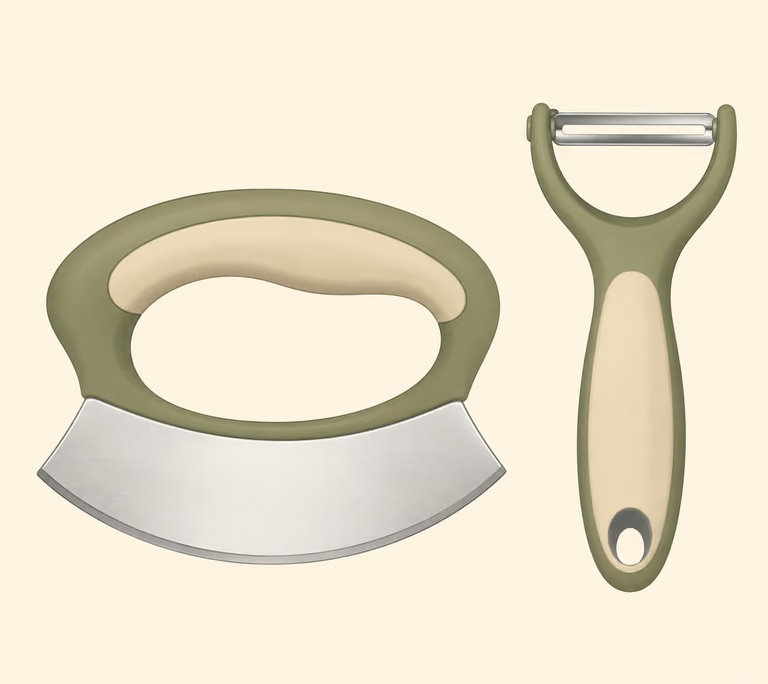
The Utopia Kitchen rocker is a simple single-piece curved blade — closer to a small mezzaluna — at a fraction of the price of adaptive brands. Its 7-inch edge covers more board per rock, so mincing herbs and chopping onions takes fewer strokes. For under $20 it is a low-risk way to test whether rocking works for your hands before investing more.

Expectations should match the price: the polypropylene handle is harder and slimmer than the others, the factory edge needs honing sooner, and fit-and-finish varies more between units. Many buyers add a cheap blade guard and treat it as a dedicated chopper alongside a regular knife.

Pros:

Cons:

Who should buy: Budget shoppers and anyone testing the rocker concept for the first time.

Who should skip: If grip pain is significant, invest in the OXO or Vive — handle comfort is worth the premium.

Check the current Utopia Rocker price on Amazon

How to Choose an Ergonomic Knife When You Have Arthritis

1. Prioritize rocker curve over length. A deeper curve converts a push-cut into a rock, cutting the forward force each stroke needs. If you mostly mince and chop, choose OXO or Vive. If you slice more, lean Mercer.

2. Size the handle to a loose grip. Studies of hand-tool ergonomics consistently find that handles around 1.25–1.5 inches in diameter let most adults maintain a relaxed power grip with less finger flexion. When in doubt, go bigger and softer — then choke up only for detail work.

3. Match weight to your wrist, not just your grip. Research on repetitive hand tasks shows fatigue climbs steeply after 10–15 minutes of continuous gripping, especially with bent wrists. Lighter knives (Mercer 3.8 oz, OXO 4.2 oz) favor longer sessions; a heavier rocker (Vive 6.0 oz) can help short, press-down cuts but tires faster.

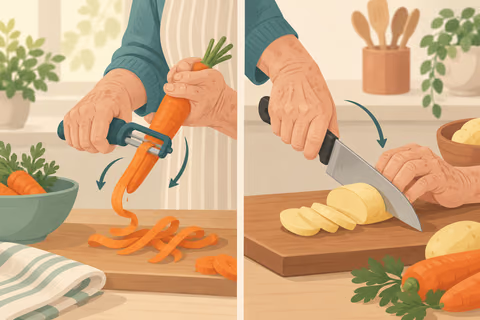
4. Keep the wrist neutral. Whatever you choose, cut with the wrist straight and move from the elbow and shoulder. Pair the knife with a non-slip board or board stabilizer, and let the blade do the work — pressing harder through pain is a signal to stop and rest.

5. Plan sharpening and care. A dull “ergonomic” knife is worse than a sharp regular one because it demands more force. Budget for a pull-through sharpener or honing rod, hand-wash rocker blades, and store them with edge guards. Replacement cost matters: a $15–$25 blade you keep sharp beats a $40 blade you let go dull.

For the full kitchen setup — boards, openers, peelers, and seating that reduce standing time — see our pillar guide: Complete Arthritis Kitchen Guide. And if you cook mostly one-handed, read Rocker Knife vs. Mezzaluna for One-Handed Cutting before deciding on blade shape.

Frequently Asked Questions

What is the best kitchen knife for arthritic hands?

The OXO Good Grips Rocker Knife is the best all-around choice for most people with arthritic hands because its curved blade rocks instead of sawing and its soft, oversized handle supports a loose palm grip. For one-handed use, consider the upright Grip-EZ; for maximum grip support, the Vive Adaptive.

Are rocker knives actually easier on joints than chef’s knives?

For chopping and mincing, yes for many users — the rocking motion keeps the wrist straighter and spreads force across the palm rather than concentrating it in finger joints. In our evaluation the deepest rockers needed the fewest push strokes per onion. Results vary by person and task; thin slicing still favors a straight-edged knife.

What handle size is best for arthritis?

Most ergonomic guidelines suggest a handle diameter around 1.25–1.5 inches with soft, non-slip material so you can hold it securely without squeezing hard. All five knives here exceed standard paring-knife girth; the OXO (~1.3 in) and Vive T-handle are the most forgiving for swollen or stiff fingers.

Can I use a rocker knife with one hand?

Yes. Upright designs like the Grip-EZ and T-handles like the Vive are specifically shaped for palm-pressure, one-handed rocking on sandwiches, vegetables, and boneless meats. Anchor your cutting board with a non-slip mat, work slowly, and keep the non-cutting hand completely clear of the blade path.

How do I keep an ergonomic knife sharp without hurting my hands?

Hone lightly every few uses with an ergonomic pull-through sharpener rather than a steel rod, which demands more wrist control. Hand-wash and dry promptly — dishwasher heat degrades edges and handles. CDC data shows over 58 million US adults live with arthritis, so manufacturers increasingly design easy-grip sharpeners too; look for a model with a suction base and fat handle.

Verdict: Which Should You Buy?

Buy the OXO Good Grips Rocker Knife if you want one safe, comfortable daily chopper — it fits the widest range of hands. Choose Grip-EZ for one-handed or wrist-neutral cutting, Vive Adaptive for the weakest grips, Mercer Culinary Adaptive for the best edge on a budget, and Utopia Kitchen to trial rocking for under $20.

Prices shift often, so check the current Amazon price on your pick before ordering, and verify the listing title matches the product reviewed here.

Medical disclaimer: This guide is for informational purposes only and is not medical advice. Arthritis affects everyone differently, and no kitchen knife can cure, treat, or guarantee relief from arthritis symptoms. Consult your physician or occupational therapist for personal recommendations. Product specs, ratings, and price ranges were accurate at writing and change over time — confirm details on the retailer’s page.

Keep reading: Rocker Knife vs. Mezzaluna for One-Handed Cutting · Complete Arthritis Kitchen Guide · Sources: CDC Arthritis Statistics · Arthritis Foundation — Joint Protection

Tested by the Senior Kitchen panel
4 volunteers aged 67–82 (three with osteoarthritis) plus an occupational therapy consultant review. We buy retail, accept no paid placements. How we test →

Keep reading

Rocker Knife vs Mezzaluna for One-Handed Cutting [2026 Verdict]

rocker knife vs mezzaluna for one-handed cutting


← Complete Arthritis Kitchen Guide (pillar)