
Outage essentials
Easy Flashlights for Seniors During Power Outages: Options Compared
On this page
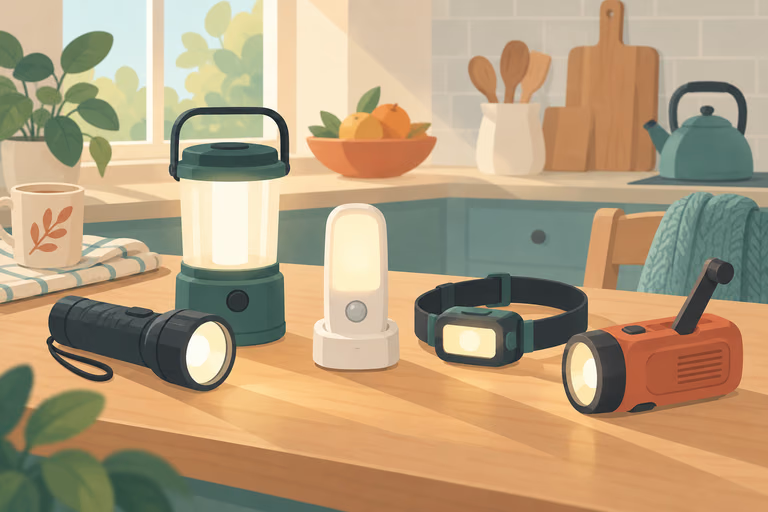
Which flashlight is easiest for seniors during a blackout?Comparison table: 5 lights at a glanceDetailed reviews: what to compare, and who should skip eachHow to choose an easy-to-use flashlight for an elderly person?Verdict: a task-based 2026 comparisonWhen the power fails, consider the route that needs light first — a hands-free area lantern, a directed carry beam, or a plug-in light by an accessible outlet — and our conditional guidance below matches each option to a documented task. Those matches are set out under the heading “Which flashlight is easiest for seniors during a blackout?” and confirmed in the closing Verdict, from current product documentation only; no light ensures safe movement in the dark.
For a research-based starting point, compare emergency lights by switch effort, area or beam coverage, battery or charging needs, placement, and the user’s ability to find and carry them in the dark. There is no universal best light. Check the current product listing and manual before relying on any feature during an outage.
Research basis and disclosure: This guide summarizes publicly available product information and practical selection criteria. It does not make an emergency-performance claim. Verify the current model, switch, power source, runtime documentation, price, and availability on Amazon. As an Amazon Associate we earn from qualifying purchases at no extra cost to you. This is shopping information, not emergency or medical advice.
Which flashlight is easiest for seniors during a blackout?
Compare a collapsible lantern when hands-free area light is useful with a classic tube flashlight when a directed beam is needed. A plug-in power-failure light may add a second layer if its current documentation confirms the automatic behavior and the outlet is accessible.
Potential fits to compare:
- Area-light candidate: Vont LED Lantern (2-pack) — compare its control, placement, and battery access.
- Plug-in candidate: Energizer Auto-On rechargeable LED flashlights (3-pack) — verify the outlet behavior and charging instructions.
- Carry-light candidate: Magicfiber rechargeable mini flashlight — compare its button, charging, and storage.
- Directed-beam candidate: Anker Bolder LC40 — check beam modes, battery options, and handling.
- Lantern and charging candidate: Goal Zero Lighthouse 600 — verify light modes, phone charging, and backup charging features.
Safety note: no light can guarantee safe movement during an outage. The U.S. Fire Administration advises using a flashlight rather than a candle for emergency lighting. Follow the selected model’s manual for charging, storage, batteries, and placement.
Comparison table: 5 lights at a glance
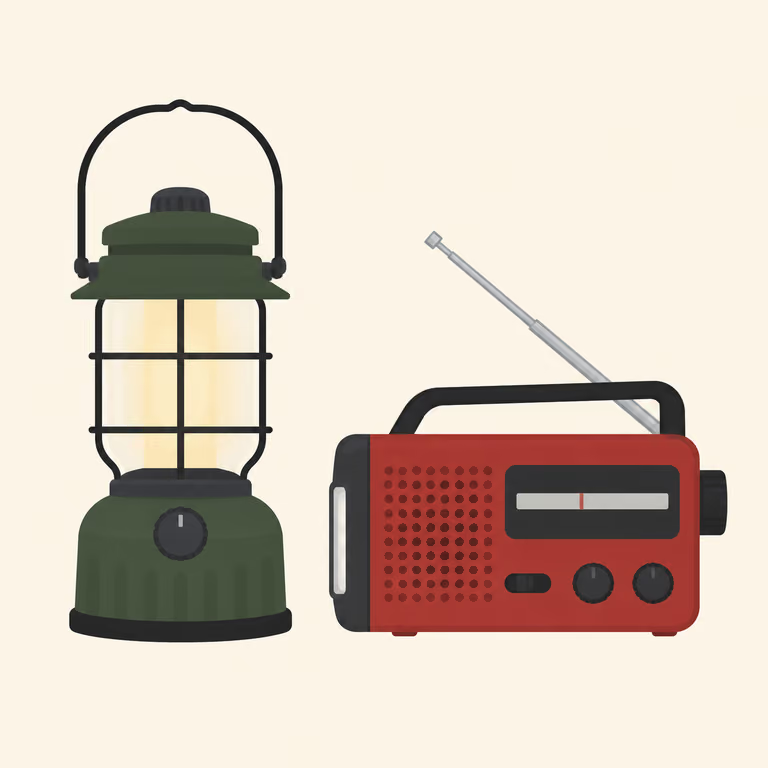
The direct links identify the Vont two-pack and Energizer three-pack. Search links may return several models. Identity checks do not establish current stock, runtime, or emergency performance.
| Product | Selection criteria | Amazon action |
|---|---|---|
| Vont LED Lantern (2-pack) | Compare area coverage, switch motion, battery access, placement, and storage | View Amazon listing |
| Energizer Auto-On rechargeable LED flashlights (3-pack) | Verify outage behavior, outlet placement, charging, and carry use | View Amazon listing |
| Magicfiber rechargeable mini flashlight | Compare button size, charging, mode selection, carry, and storage | Search on Amazon |
| Anker Bolder LC40 | Check beam modes, battery options, grip, weather guidance, and storage | Search on Amazon |
| Goal Zero Lighthouse 600 | Compare area light, directed beam, charging, phone support, weight, and placement | Search on Amazon |
Product details, prices, ratings, and availability change. The links are shopping paths, not independent emergency-performance scores.
Detailed reviews: what to compare, and who should skip each
1. Vont LED Lantern (2-pack) — area-light comparison
For this lantern, check the current listing for the pull handle, control motion, area-light pattern, battery type, dimensions, and stable placement. A hands-free lantern may be useful on a table or nightstand, but the user still needs to find, position, and maintain it.
- Compare: switch movement, area coverage, battery access, placement, and whether a two-pack fits the home’s rooms.
- Limitation: an area lantern is not a long-distance beam. Verify battery inclusion, runtime, and light output on the current listing.
- Who should consider it: users who prefer a light that can sit in a fixed location.
- Who should skip it: anyone who needs a directed outdoor beam as the primary light.
2. Energizer Auto-On rechargeable LED flashlights (3-pack) — plug-in comparison
If the current documentation confirms outage activation, a plug-in light can provide a fixed backup location. Check its outlet position, charging behavior, removal method, carry use, and documented runtime before relying on it.
- Compare: confirmed outage behavior, outlet access, charging, carry use, and placement away from traffic.
- Limitation: it depends on an accessible outlet and documented charge capacity; it is not a substitute for a room light unless the current instructions support that use.
- Who should consider it: users who want a fixed backup at an accessible outlet.
- Who should skip it: anyone needing a primary light for a long outage; add a suitable lantern or carry light.
3. Magicfiber rechargeable mini flashlight — carry-light comparison
For a small rechargeable light, check the current listing for button placement, mode selection, charging connector, dimensions, output, and documented runtime. A carry light is useful only when it is stored where the user can find and operate it.
- Compare: button size, mode behavior, charging, carry attachment, and storage visibility.
- Limitation: a small body can be easy to misplace, and mode cycling may be difficult for some users. Verify the charging and runtime instructions.
- Who should consider it: users who can carry and recharge a small light.
- Who should skip it: anyone who needs a larger body or simpler fixed area light.
4. Anker Bolder LC40 — directed-beam comparison
For a directed beam, check the current manufacturer or listing information for modes, output, battery options, weather guidance, switch operation, grip, and runtime. Match the beam to the task and avoid relying on an unverified output or water-resistance rating.
- Compare: beam control, grip, battery access, documented weather use, storage, and mode memory.
- Limitation: a multi-mode tube light can be harder to operate in the dark and may be too heavy for some users. It is not a substitute for professional electrical or outdoor safety.
- Who should consider it: users who need a directed beam and can manage its documented controls.
- Who should skip it: users who need hands-free area lighting as the primary layer.
5. Goal Zero Lighthouse 600 — lantern and charging comparison
For a larger emergency device, check the current documentation for area and beam modes, phone charging, charging methods, placement, weight, and documented runtime. Keep any multi-function device where the user can reach and operate it.
- Compare: area and beam controls, phone charging, alternate charging, weight, placement, and care instructions.
- Limitation: a larger multi-function unit may be harder to lift or configure. Verify current charging and runtime documentation before treating it as a phone or lighting backup.
- Who should consider it: users who can keep a larger device in a stable location and need documented charging features.
- Who should skip it: anyone who needs the lightest carry option or the fewest controls.
How to choose an easy-to-use flashlight for an elderly person?
1. Prioritize the switch and placement. Compare a pull handle, large side button, plug-in control, or mode selector with the user’s hand movement. If a light needs two hands or a difficult twist, it may be a poor fit in a dark hallway.
2. Match coverage to the path. Consider a hands-free area light for a fixed room and a directed beam for a specific inspection. Lighting choice cannot guarantee safe movement; keep paths clear and follow the household’s emergency plan.
3. Match power to ability. Rechargeable or replaceable batteries each have care and access requirements. Store compatible spares or a charging cable where the user can find them, set a check schedule that follows the manual, and follow the manufacturer’s storage and charge guidance.
4. Plan locations, not just products. Place an area light where it can be reached from the bed, a backup near an accessible outlet, and a carry light on a known route. Walk the route in daylight and keep each light in its assigned place.
5. Avoid open-flame lighting indoors. The U.S. Fire Administration recommends flashlights rather than candles during a power outage. Keep battery or rechargeable lighting in the emergency kit and follow local emergency, evacuation, and medical-equipment guidance.
For the broader outage plan, start with our power outage survival hub for seniors.
Frequently asked questions
What is an easy flashlight for an elderly person to use in a power outage?
There is no universal easiest model. Compare a collapsible lantern for fixed area light, a plug-in light for an accessible outlet, and a carry light for a directed beam. Prioritize a control and storage location the user can find and operate without a difficult twist or repeated setup.
Are plug-in power failure lights good for seniors?
They can be a backup layer when the current documentation confirms the outage behavior and the outlet is accessible. Check charging, placement, carry use, and documented runtime, then pair the device with an area or carry light if the route needs more coverage.
How many lumens does a senior need during a blackout?
There is no single lumen number for every room or user. Compare diffusion, beam shape, switch control, placement, and the manufacturer’s documented output with the route that needs light. More output does not guarantee safer movement.
How often should I check emergency flashlight batteries?
Set a recurring check cadence that follows the product manual. Confirm that each light turns on, replace or recharge it as directed, and store spare batteries or cables safely. Keep the light in its assigned location so a check reflects the real emergency setup.
Are candles safe for elderly people during power outages?
The U.S. Fire Administration recommends using flashlights rather than candles for power-outage lighting. Open flames can tip or ignite nearby materials, so follow local fire-safety guidance and keep the chosen battery or rechargeable light ready.
Verdict: a task-based 2026 comparison
Compare the Vont LED Lantern 2-pack for fixed area light, the Energizer Auto-On light 3-pack for accessible outlets, and a carry or charging light for the remaining route. These are task-based candidates; the choice remains user-specific. Verify current product details on Amazon.
Prices and availability change — check Amazon for the current listing. Once a light arrives, place it where it is needed and follow the manufacturer guide for batteries, charging, storage, and maintenance.
Models named in this guide
Catalog-verified identities, checked against the listing on the date shown. Prices and availability change; re-check the listing before buying.
- no photoVont LED Camping LanternView the listing →
- no photoEnergizer Auto-On Rechargeable LED FlashlightsView the listing →
More guides for this task

Outage essentials
Easy-Open Water Storage Options for Seniors
Outage essentials
Emergency Gifts for Older Homeowners: Kit Layers