
Outage essentials
Winter Apartment Blackout: Light, Water, No Indoor Fuel
On this page
Heat is a building problemLight, fridge, waterThe apartment kit, in layersNeighbors and contactsSourcesA winter blackout in an apartment is a different problem from a suburban one: shared walls, no generator, building rules, and often a single heat source you do not control. The plan therefore has a fixed order — protect light and the food clock first, never improvise heat, and treat the building as the heat decision-maker. Ready.gov power outages and the kit page remain the national baseline, and Ready.gov: Power outages exists precisely because the “just this once” indoor grill kills people. A balcony may still be a CO and fire problem — follow the lease and local fire code, not a blog.
The recommendations here rest on published preparedness guidance — Ready.gov, USFA, food-safety charts — rather than on this site’s own storm log, and nothing on the page is ranked or scored. Products mentioned are identified by catalog model; verify the live listing and the seller’s terms before ordering. This is not medical advice.
Affiliate disclosure: As an Amazon Associate we earn from qualifying purchases. Direct
dplinks are catalog-verified identities only. Search links can mix variants. Check manufacturer, model, seller and price.
Heat is a building problem
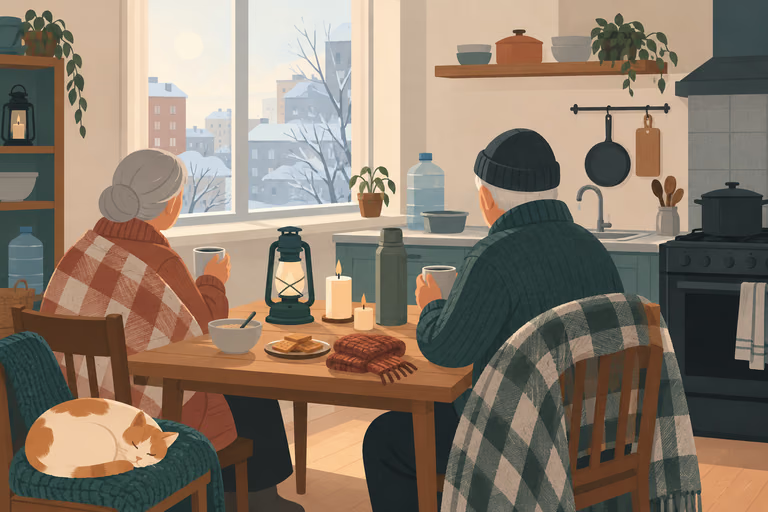
This page will not tell you to run a camping heater. If the building loses heat, the correct escalation is management, then 311 or the utility, then 911 if it becomes life-threatening. Layer clothing instead: hats, layers you can add and remove, and blankets — warming the person, not the room, is the only apartment-safe strategy. Do not use the oven as a furnace; Ready.gov’s power-outage page says never use a gas stovetop or oven to heat a home. Gas ovens add carbon monoxide to the risk; electric ovens add the fire risk of leaving an appliance on for hours under towels or coats.
The same logic rules out charcoal, propane camp stoves, gas grills, and generators anywhere inside — including balconies and enclosed porches. CO has no smell, and apartment walls and balconies do not magically ventilate it. Ready.gov: Power outages is the page to read in full before winter, not during the outage; if a CO alarm sounds, leave and call 911.
Light, fridge, water
Three clocks run during every outage, and each has a public rule.
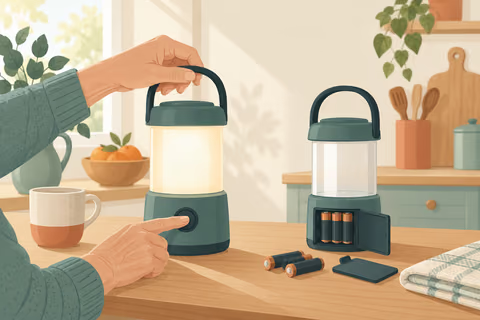
Light. Flashlight, not candle (USFA candle prevention). Keep one flashlight where you sit and one at the bedside; plug-in auto-on lights turn on when the power fails, removing the midnight hunt during an outage. Catalog-verified lights used on this site: Energizer Auto-On (View Amazon listing) and Vont lantern (View Amazon listing) — see the lightweight lantern guide for how the two jobs differ. In winter, darkness starts early and lasts long, so lighting is not a luxury item on this list.
Food. A closed refrigerator keeps food safe for about 4 hours, per FoodSafety.gov’s power-outage chart — the door stays shut, full stop. A full freezer holds longer than a half-empty one; jugs of ice keep it full. The size of your apartment fridge does not buy you a private, longer number. When in doubt, throw it out — the chart’s categories exist so you do not have to gamble. More detail: no-cook emergency food.
Water. Store what you can actually pour and carry in a small kitchen. A 5-gallon fill may be the wrong object for an elevator-less fifth floor — the easy-open water storage guide covers container choices for exactly this situation. Fill the bathtub or sink before an expected storm if your building allows; that water is for flushing and washing, not drinking, unless treated.
The apartment kit, in layers
| Layer | What belongs in it | Why for an apartment |
|---|---|---|
| Light | Two flashlights or one lantern + one plug-in auto-on | Night paths and a room to wait in; candles banned by fire logic |
| Food clock | Fridge thermometer; cooler on standby | The 4-hour rule needs the door shut, and decisions need a temperature |
| Water | Small pourable containers you can lift | Elevators and stairs decide the container, not the store |
| Warmth | Layers, blankets, hats — no fuel devices | No generator; improvised heat is the CO killer |
| Contacts | Paper card with super, neighbor, doctor, pharmacy | Phones die and doorbells are electric |
| Power for devices | Charged power bank sized for your phone | Texts to family beat a dead phone in the dark |
The power-outage readiness hub expands each layer; the power-outage readiness hub covers the warm-season version of the same plan.
Neighbors and contacts
An apartment’s best resource is a neighbor with a knock. Agree in advance — with consent — on who checks on whom when the lights go out. Keep a paper card with the super’s number, one neighbor, your doctor, and the pharmacy, because doorbells, elevators, and cordless phones all assume power; the power-outage readiness hub lists the fields. During a storm forecast, text your circle early, charge phones and power banks, and tell someone where you are. Ready.gov’s kit page makes the same point generically: plans written before the event are the ones that run themselves after it.
The first thirty minutes of a night outage have their own sequence — see easy flashlights for elderly hands. And if winter outages repeat every year, that pattern is worth raising with management in writing before the season starts.
Frequently asked questions
Can I use a charcoal grill on the balcony for heat and food?
Treat fuel-burning heat as a CO and fire question. Ready.gov power-outage guidance is written because people die doing this. Building rules may ban it outright — check the lease and local fire code first.
How long will the fridge last in a small apartment fridge?
The public clock is still about 4 hours closed unless the door is opened. Size of the box does not give you a private number. No-cook emergency food has the details.
Can I warm my apartment with the oven or a camping heater?
No. USFA’s cooking-fire guidance rules out ovens as heaters, and Ready.gov’s CO page rules out fuel-burning devices indoors — including balconies. Layer clothing and escalate to management, 311/utility, or 911.
What is the first thing to do when the power fails at night in winter?
Light first (flashlight, not candle), then check whether it is your unit or the building, then close the fridge and plan around the 4-hour clock. The full sequence is in the flashlight guide.
Sources
- Ready.gov: Power outages
- Ready.gov: Build a kit
- Ready.gov: Power outages
- FoodSafety.gov: Power-outage food chart
- USFA: Candle fire prevention
Related reading: Power-outage readiness hub · Lightweight lanterns · Easy flashlights · No-cook emergency food
Models named in this guide
Catalog-verified identities, checked against the listing on the date shown. Prices and availability change; re-check the listing before buying.
- no photoEnergizer Auto-On Rechargeable LED FlashlightsView the listing →
- no photoVont LED Camping LanternView the listing →
More guides for this task
Outage essentials
Best Lightweight Lantern for Elderly Hands With Arthritis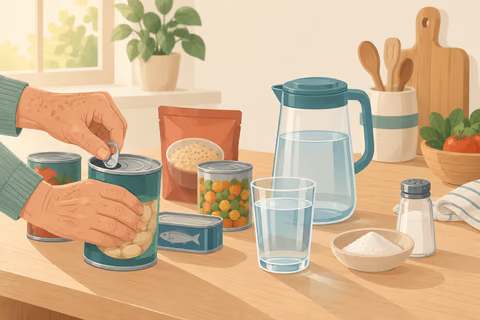
Outage essentials
No-Cook Emergency Food: Opening, Water, Sodium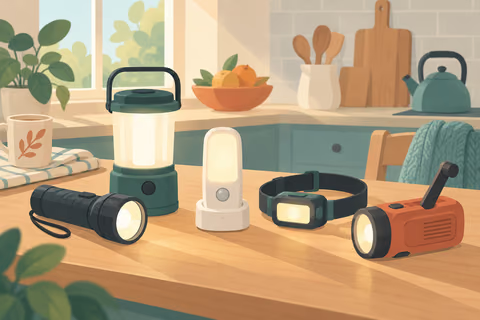
Outage essentials
Best Flashlight for Elderly: Easy Power-Outage Picks